
Insights and Technology
Our story, vision and perspectives on technology, design and business solutions.
Featured Articles

That doesn’t mean I’m not proud of what we’ve accomplished. I’d just rather let the facts speak for themselves. Our Clutch.co profile is a perfect example: I much prefer letting our clients talk about their experience with us over trying to prove our expertise and professionalism.
With a stellar score like ours (spoiler alert: we’re at 4.9 out of 5 as I write this), you’d think the last thing we should do is mess with a winning recipe.
Maybe, but that’s not how I see it. And it would have made for a pretty short article.
What’s Behind a Near-Perfect Score
Our Clutch.co profile has been active for several years. Our near-perfect rating there makes for an excellent calling card and shows the level of service our clients are entitled to expect.
We also measure our Net Promoter Score (NPS) with our clients, and here too, we have an exceptional score of 83. Not a single detractor in sight.
What our 26 Clutch reviews and roughly 25 NPS respondents don’t show are all the people who didn’t answer the call. Where are the hundreds of clients we’ve served since we started out in 2003?
That missing data keeps me up at night: what on earth is the silent majority thinking? With that in mind, we’ve launched a major customer experience initiative to get to the bottom of it and, let’s be honest, help me sleep at night.
Customer Experience: Where Do You Start?
Customer experience is the heart of a services company. Probably of every type of company, but certainly of ours.
Every department, every employee, can tie what they do directly to a client, or at most with one degree of separation. In the famous RACI matrix, if everyone is Responsible for customer experience, who is ultimately the one person Accountable?
The easy answer would be me, but you could say that about practically everything.
Instead, we agreed that the marketing team would take charge of our clients’ experience, or more specifically, our Vice-President of Marketing. We took the opportunity to change her title to “Vice-President, Marketing and Customer Experience” to highlight how much importance we place on it, and to reinforce that this isn’t a project with a beginning, a middle and an end.
Now that there’s an accountable VP, we’re all set. Right?
Systematizing Human Experiences
Customer experience rests on a series of human interactions. The words used, the tone, the speed of the exchanges and the outcome all matter a great deal, but ultimately, it’s how people feel that truly lasts.
So how do we make sure our clients’ experience is memorable, for the right reasons, consistently, no matter who they’re talking to? Here’s the approach we chose to take.
First, we need to take stock of where things stand:
- Who talks to clients?
- At what point(s)?
- How?
It’s also essential to measure current client satisfaction. Hard to improve if you don’t know where you’re starting from!
As mentioned earlier, we already had an indirect measure through our Clutch.co reviews, and we now systematically measure NPS with our active clients. The next step will be to get the silent majority talking, without alienating them.
The biggest challenge is still ahead of us. Once we’ve mapped out every client interaction, we’ll need to define the RACI for each step and make sure it’s clearly understood, and applied, by every single person.
Next, standards (response times, communication channels, level of language, etc.) will need to be defined across the board, adapted to our different client personas, and our staff trained accordingly. Once that’s firmly in place, we can look at the key moments in our customer journey to delight our clients and build even stronger loyalty than we do today.
It’s no small feat, but we’re convinced that in a world undergoing profound transformation, a customer experience built on meaningful human relationships remains essential.

From one talk to the next, the same message kept coming up: with artificial intelligence, organizations need to see early results within weeks, a few months at most. We're no longer talking about years to calculate the ROI of AI initiatives.
The software development model is undergoing a profound shift. Teams are getting smaller, agents are producing code autonomously, and the human role is evolving: people define the objectives guide the work and verify the outcome.
It's a transformation we're experiencing at Spiria. And we keep asking ourselves: how can we move fast without losing control?
ALL IN confirmed that we're heading in the right direction.
When Is It Good Enough?
With AI, getting a working prototype has never been faster. We can now be agile to the extreme.
But "it works" doesn't mean "it's ready." When agents generate in a single day what once took weeks, it becomes easy to mistake a prototype for a complete, ready-to-use software.
So, what needs to be confirmed and what needs to be true before we can say a solution is solid enough?
To answer that, we have to think about what comes after the prototype.
The first challenge is often a hidden long-term cost: maintenance, support and reliability.
If the foundations aren't solid enough, these costs won't be our only concern. We also risk delivering lower-quality software. And low-quality software often brings an array of potential security vulnerabilities.
So, we need to adjust our processes to maintain this speed while drawing on the strength of the team. The right expertise has to come in at the right time, before deployment. Architecture, security, quality, and user experience need to enter the loop before the prototype becomes the foundation of a product. Because "good enough" software must be well coded, but above all, it must solve your users' needs.
We don't have the perfect recipe, but for us, the finish line doesn't change. It's how we get there that's changing completely.
Governance as an Accelerator
Governance is often associated with slowness and cumbersome processes. With agentic AI, it can instead become an accelerator: the key to moving faster. At ALL IN, one speaker summed it up this way: it's not governance that slows AI down, it's the lack of it. Without a framework, the speed gained upfront is lost to rework, uncertainty and, above all, a loss of trust.
And even if we're moving faster, we need to be moving in the right direction. A phrase from another talk, "systems over prompting," captures where we need to focus our efforts. Performance doesn't come from the quality of a single prompt. It comes from the system the agent works within: clear conventions, tests and well-defined validation steps. Governance is that framework. It's what allows agents to move fast without drifting off course.
Accountability Remains Human
An agent can produce code, but it can't be held accountable for it. In a software project, trust ultimately rests with the professionals who build the product. In operations, we know this well: when several people are responsible for something, no one really is. That's why every agent must have a named owner: one person, not a team. And because every piece of software we deliver is custom-built, someone on each project must also validate what the agent produces and be able to answer for it to the client. Deliver, operate, defend.
This principle goes beyond code and also applies to our role as managers. Don't be tempted to hand off to AI the hard things we should be doing human to human, like replacing a delicate discussion with a well-crafted email. One speaker even described it as a kind of leadership atrophy. There are tasks, conversations and moments that should remain human. AI can help us prepare for them. But it should never have a difficult conversation on our behalf.
Moving Forward with Confidence
Speed is new to the equation. Accountability remains as important as before. The organizations that get real value from agentic AI will be those that can accelerate while staying in control of what they build, deliver and operate.
Want a hand using AI with confidence in your software projects? Let's talk.
All Articles

Software and the Defence Market in Canada: What a Company Should Look for in a Partner
Software, a critical capability in defence
Defence is often pictured through its physical equipment, yet a decisive part of the sector now rests on software, systems integration, data and the experience of the people using it in the field. That shifts where the risk sits, since a system's value depends directly on the quality of its software design and on its ability to be deployed and used in real conditions.
This also explains the growing place of expertise from other sectors in this field. In defence, dual-use usually refers to a civilian technology repurposed for military use, and the same logic applies to know-how, since interface design, software architecture, cybersecurity and complex systems integration are all directly applicable capabilities, provided they are delivered to defence's level of demand.
Software skills from the commercial sector have their place in defence
In defence, a software's quality can matter as much as its features, particularly its reliability and ease of use in the field. The skills that make this possible, such as UX/UI design, mobile development and security management, were often developed in the commercial sector before finding their use in defence.
The NORTAC Orion application, built for Nortac Defence, is a concrete example, since it turns a smartphone into a tracking, encrypted-messaging and emergency-alert system that works even offline. The project brought together requirements typical of defence, namely communications security, offline reliability and near-real-time performance, met with mobile expertise from the commercial sector.
In this market, relationships and knowledge of the ecosystem matter as much as technical expertise, since they shape access to opportunities and shorten often lengthy cycles. It is a space built over time, through industry gatherings and relationships with prime contractors, where Spiria has been active for several years, notably through CADSI.
What delivering in defence really demands
Beyond technical skill, this market adds a layer of requirements a company has to fully absorb, because protecting sensitive information reshapes how software is designed, hosted and delivered. On the cybersecurity side, a mature software company already applies most of the expected standards, such as SOC 2 or the CPCSC that is gradually working its way into defence contracts.
The most often underestimated factor sits on the physical security side, since access to premises, permitted devices, the work environment and even the network can all be controlled. These requirements take time and investment, and a credible partner anticipates them rather than having to build that capability under pressure once a mandate has been awarded.
Certifications, explained simply
Certification requirements are another source of complexity, because people often assume there is a single, universal accreditation that would open every door. The reality is more nuanced, since requirements depend on the mandate and the information involved, and three main mechanisms coexist in Canada. The point is twofold, to understand what a mandate may require, then to verify what a partner actually holds.
- Controlled Goods Program (CGP): it governs examining, possessing or transferring controlled goods and technologies, and becomes necessary when a mandate involves such goods or tender documents that contain them.
- Security clearances (Contract Security Program): they grant access to protected or classified information, assets or sites, depending on the level the contract requires, from Reliability Status up to Top Secret.
- CPCSC (Canadian Program for Cyber Security Certification): it attests that cybersecurity controls match the contract's risk, and it is gradually appearing in defence tenders, with a level 1 in force since 2026.
Above all, keep in mind that these mechanisms are distinct and that a single mandate may call for one, several or none. A good partner helps you open the right doors at the right time, those that match the type of mandate in view, rather than piling up accreditations unrelated to your needs.
What distinguishes a credible supplier in defence
If you are assessing a partner for a software project in a defence environment, a few concrete criteria quickly tell a credible supplier apart.
- Real experience in a critical or regulated context. Which comparable projects have been delivered, and with what results?
- Demonstrable cybersecurity maturity. Can the supplier provide a current attestation, for example SOC 2 Type 2, and its evidence of controls?
- The ability to add the right controls for the mandate. How does it adapt the CGP, security clearances and the CPCSC to the contract's risk?
- A command of physical security and field constraints. How does it protect sensitive information in its premises and work environments?
- A real presence in the defence ecosystem. Is it active and recognized among the sector's prime contractors and buyers?
These criteria hold as much for a defence project as for any other critical environment, which is also why expertise proven in one sector often transfers to another. One principle sums up entering this market well, namely that certifications can make you eligible, while relationships make you visible.
In summary
Entering a defence project is prepared with method rather than with a race for accreditations. Requirements vary by mandate, cybersecurity and physical security alike are verified through concrete evidence, and knowledge of the ecosystem weighs as much as certifications. The essence comes down to a simple idea: assess a supplier on its real experience and its ability to prove its controls and add the right ones at the right time, rather than on the number of its accreditations.
If you are preparing a software project in a demanding environment and looking for a partner able to deliver at that level, let's talk.

The Same Script, Told Again and Again
By the end of the first day of ALL IN, I noticed that speakers had started to repeat each other. Whatever the panel, the message was some version of "AI is urgent, it will change everything, and we need to retain our sovereignty."
At first, I thought the problem was me. I'm a software developer at heart, so maybe my appetite was just to hear about code and see it in action. The more I listened, though, the clearer it became that I wasn't missing technical depth so much as lived experience. Almost nobody explained how AI had changed their own organization. Every news outlet already tells us AI is the next big thing, so a room full of practitioners should be able to tell us something the headlines can't. Where did you start? What did you try? What worked, what failed, and what would you do differently if you started over tomorrow? I heard almost none of that.
Instead, a large share of the programme went to investment, governance and data sovereignty. Those topics matter, and some of those conversations were excellent, but they stay high up. They tell you where the money is going, and very little about what happens when a team sits down and tries to use the technology.
Sovereignty is not residency
Some panellists did say things every executive should hear, and it was good to hear this one said out loud: data sovereignty is not the same as data residency.
Many people still mix up the two. A provider tells you your data sits in a Canadian data center, and that feels like control, but where your data is stored doesn't decide who can reach it or what happens to it. Canadian lawyers and infrastructure providers have warned that data held by a foreign-owned provider can still fall under that provider's home-country laws. The best-known example is the U.S. CLOUD Act, which can apply even when the servers are in Canada.
AI adds another layer that is easy to miss. Real sovereignty also means controlling how the AI services you use treat your data. A service that trains on your information as you use it doesn't forget that information when you vacate the premises because it keeps footprints of it in its DNA. Vendor lock-in used to be about contracts and migration costs, and now it's also about what you have already handed over without realizing it. That makes every AI vendor decision a riskier one than it looks.
That distinction is exactly why the investments announced around ALL IN matter. Two days before ALL IN, Bell announced a $50-billion expansion of its AI data-centre project in Saskatchewan, the largest private capital investment in Canadian history. At the event itself, Canada and Germany committed new funding to LawZero, a lab building trustworthy AI, and held the first meeting of their Sovereign Technology Alliance.
An Invitation to Experiment
I would have loved to hear more trial and error from the stage. I understand why it's rare. AI isn't a fixed target, and what you say today may look naive in six months, so sharing an experiment that didn't work takes courage.
The industry won't wait for anyone to catch up, though. Enormous sums are flowing into infrastructure, and impatient shareholders are waiting for their returns. If the target keeps moving, our processes must move with it, which means faster thinking and more experimentation. Waiting for AI to be perfect before getting on the train means never getting on at all. The internet has never been perfect either but somehow, we have managed to work with it.
So start now, with what you have, and share what you learn, failures included. That's what I was hoping to hear from the stage.
We no longer have an AI problem. We have a talent problem.
The idea I heard most, and the one I agree with most, is that technology is no longer the bottleneck. People are. What we have to work out is how to build the skills, habits and judgment our organizations need to use these tools well. Canada and Germany both named talent as a priority, and that priority now has to reach every team, not just the research labs.
As a developer, I left ALL IN wanting more. As someone who manages a team of developers, I left a little reassured because nobody in that building has found the magic formula that makes everyone ten times faster. A company is more than its developers. Make developers ten times faster while everyone around them stays the same, or slows down trying to keep up, and you haven't solved anything. You've just moved the bottleneck downstream.

On a sunny summer Thursday, Spiria held its first hackathon entirely dedicated to agentic development. In concrete terms, the goal was to build a solution using agentic development (also known as agentic AI), a technology capable of designing AI systems that can execute end-to-end tasks autonomously (analyzing, deciding, acting, and iterating) without constant human intervention.
Everyone at Spiria participated. Whether their expertise was in software development, finance, or UX/UI design, the event brought together our entire team across Canada. Whether from one of our offices or remotely, each person chose to build one of 11 proposed tools, all designed to address real needs tied to Spiria's operations.
Participants paired up with a tool such as Codex, Claude Code, or GitHub Copilot, and had the support of a team of internal coaches, people who had already developed an expertise in agentic AI.
This experience confirmed one thing: agentic development is already transforming the way software is designed and built.
Why do this?
Believe it or not, being the CEO of a software development company in the age of AI, especially with the rise of agentic AI, shakes things up. But being passionate about programming and having built a career from it is, for many other passionate people like me, even more confronting.
I still do a lot of development for fun and for internal projects at Spiria, but I obviously don't know every software technology out there. As agentic AI became more sophisticated, I knew I had to try it myself, using technologies I'm less familiar with.
I first tested Codex to build an internal tool for my colleagues in the Culture and Talent department, and within a few hours, in a technology I don't master at all, I created a working prototype. I immediately understood that it was time for me to change the way I code. I can no longer limit myself to only doing what brought me so much intellectual pleasure; it's now up to me to find other sources of stimulation.
The reality is that the last four decades have been filled with revolutions that simplified my life as a developer. Here, agentic AI is changing my day-to-day completely. I knew the whole team needed to experience it for themselves in order to understand it, and to learn it.
Beyond code generation
AI tools have long been seen as assistants, capable of writing a few lines of code, completing a function, or recalling the syntax of a programming language.
Today's agents go much further.
They can analyze a codebase, modify multiple files, run tests, spot errors, suggest an architecture, generate documentation, and take part in complete development cycles.
This doesn't mean human expertise becomes less important. On the contrary, its role changes and becomes even more decisive.
An agent can produce code quickly. On its own, however, it doesn't understand an organization's priorities, industry-specific constraints, operational risks, security requirements, or the long-term consequences of a technology decision.
This is precisely where the expertise of an experienced team proves its worth.
Our clients aren't simply chasing novelty
Most of our clients don't ask us to use a technology simply because it's new or trendy.
Above all, they want their solution to work.
- They want it to be secure.
- They want it to be maintainable.
- They want to be able to evolve it.
- They want to avoid depending on a fragile prototype, a single vendor, or a technology choice that will quickly become a liability.
Agentic development doesn't change these fundamental expectations. Instead, it increases our ability to meet them faster.
Used correctly, agents can reduce time spent on repetitive tasks, speed up the production of first versions, make it easier to explore multiple technical approaches, and improve certain validation processes.
They also allow our teams to spend more time on the aspects that require the most judgment: understanding the problem, defining the right architecture, protecting data, managing trade-offs, ensuring quality, and preparing for the future.
Speed isn't enough
It would be easy to reduce agentic development to a promise of productivity.
Producing faster is useful, but it isn't enough.
Software that's delivered quickly but is hard to maintain, poorly secured, or poorly suited to real needs remains a bad investment.
The value of agentic development therefore depends on how it's governed.
Agents' responsibilities need to be clearly defined, the tools and data they can access need to be controlled, their decisions need to be validated, rigorous development standards need to be maintained, and their use needs to be integrated into existing quality assurance and cybersecurity practices.
It's also important not to confuse generation speed with delivery speed.
Code is only part of the work. There's still a need to understand requirements, manage dependencies, test critical scenarios, prepare deployment, document decisions, and ensure the solution's continuity.
Agentic development becomes truly compelling when it's integrated into this entire value chain.
A new way of mobilizing our expertise
Every technological advance has allowed us to focus on more complex problems.
High-level languages, software libraries, development frameworks, cloud services, and automation tools have gradually eliminated a great deal of manual work.
Agentic development is part of this continuity, but its impact could be even greater.
As agents take on a larger share of technical production, value will shift toward the ability to guide them well, evaluate their output, and integrate their work into coherent systems.
There will always be a need to define the right requirements, choose the right paradigms, establish the right constraints, and ensure the different components work together.
There will always be a need to understand users, operations, risks, and business objectives.
That's where Spiria's expertise lies.
What Spiria brings to agentic development?
Our role isn't simply to plug an AI tool into a project and hope it produces a satisfactory result.
We help our clients determine where agentic AI can genuinely create value.
We can use it to speed up prototype design, modernize an existing application, automate certain tasks, support development teams, improve testing, or explore different solutions more quickly.
But we do it with the same rigor we apply to all our projects.
This means paying particular attention to architecture, security, privacy, code quality, maintainability, observability, and the long-term viability of solutions.
It also means choosing the right level of autonomy.
In some contexts, an agent can carry out tasks very autonomously. In others, it must propose actions that are then reviewed and approved by a person.
Turning experimentation into lasting value
Our hackathon allowed us to experiment quickly, test our assumptions, and better understand the real capabilities of today's tools.
It also reminded us that an impressive demo is only the starting point.
The real work is turning that capability into reliable, secure, and durable solutions.
That's exactly what our clients expect from us.
Agentic development is opening the door to new ways of building software. It can help us move faster, explore more, and spend more energy on the decisions that truly matter.
But its value doesn't rest on technology alone.
It rests on the expertise of the people who know how to use it, how to govern it, and how to integrate it into a long-term vision.
This is how Spiria intends to approach agentic development: with curiosity, with pragmatism, and with the determination to build solutions that work today and will keep working tomorrow.
And you... How is your company approaching agentic AI?

There was a time when joining the software industry felt less like arriving and more like being admitted into a new school.
After years of academic learning, becoming a software developer did not mean you finally "knew." It meant you had earned the right to begin learning differently. You entered as a junior. You listened. You respected the people who had already spent years debugging production systems, designing fragile integrations, recovering from bad abstractions, and learning which elegant ideas survived contact with users.
Experience was not measured only by years employed at a company. It was measured by depth of understanding, judgment under uncertainty, and the ability to pass knowledge on. Younger developers sought mentors with the intensity that modern social media influencers seek followers. The craft had a kind of sacredness to it, because the work demanded humility.
To apply for a software developer role implied that you understood both the art and science of the profession. You were expected to know, or at least be actively learning, the foundations: TCP/IP, load balancing, database indexing, trees, graphs, hash tables, sorting and searching algorithms, Big O notation, garbage collection, threading, concurrency, memory management, design patterns, SOLID principles, testing strategies, refactoring techniques, and the difficult judgment of when not to use the clever thing you just learned.
Those were also the days when autocomplete was the closest thing to a copilot. When a complex problem appeared, peers often went for coffee and talked it through before losing hours in the wrong direction.
Now the ground is shifting. AI has not made the fundamentals irrelevant. It has made them easier to bypass.
A developer can now ask an AI tool to explain a TCP protocol, generate a database migration, suggest indices, write tests, refactor a class, summarize unfamiliar code, or scaffold an entire feature. Often, the tool will produce something useful. Sometimes it will produce something confidently wrong. That distinction is central to the future of software development.
The question we ask ourselves as practice leads is no longer, "Can AI write code?" It clearly can. The question we now ask ourselves is "Who is qualified to know whether the code is correct, maintainable, secure, observable, and aligned with business?"
AI Is Already in the Workflow
This is not a distant future. It is already happening.
Let’s look at the data.
The 2025 Stack Overflow Developer Survey found that 51% of professional developers use AI tools daily, and 52% say AI tools or agents have had a positive effect on their productivity. Among developers using AI agents at work, about 70% say agents have reduced time spent on specific development tasks, and 69% say agents have increased productivity.
At the same time, trust remains a serious concern. The same survey found that 87% of respondents are concerned about the accuracy of information provided by AI agents, and 81% have concerns about security and privacy. Adoption is rising, productivity is real, and confidence is incomplete.
Controlled research shows the same tension. The widely cited Peng et al. study of GitHub Copilot found that developers using the tool completed an HTTP-server task 55.8% faster than those without it. McKinsey's research also found that generative AI can make developers significantly faster on code generation, refactoring, and documentation, while emphasizing that quality depends on developers understanding what good code looks like and iterating with the tool.
But the picture is not uniformly positive. A 2025 randomized controlled trial by METR studied 16 experienced developers working on large, mature open-source codebases they had contributed to for years. The result surprised many people: developers were 19% slower with AI assistance than without, even though they believed they were roughly 20% faster.The researchers attributed the gap to context-switching, prompt iteration, and the cognitive cost of reviewing plausible-looking output.
The 2024 DORA Accelerate State of DevOps report adds another caution. Across respondents who reported relying on AI for at least part of their work, AI adoption was associated with an estimated 1.5% decrease in delivery throughput and a 7.2% decrease in delivery stability. DORA's hypothesis is that AI may help developers produce larger changelists, and larger changes have long correlated with slower, more brittle delivery.
In other words, AI can accelerate the work, but the gains are uneven and do not automatically translate into better systems. The acceleration has to be earned through judgment.
The Developer as Orchestrator
The software developer role is being reshaped.
The developer is becoming more of an orchestrator, reviewer, architect, and supervisor of intelligent systems. As agentic tools become more capable, more implementation work can be delegated. The human role moves upward: defining the problem, decomposing the work, choosing the architecture, constraining the agent, validating assumptions, reviewing outputs, and ensuring that the final system behaves correctly.
This does not mean developers can afford to know less. They need to know more broadly.
A developer working with AI needs enough architectural understanding to recognize when a generated design will not scale, when a service boundary is wrong, when a database query will collapse under real traffic, or when a security assumption is naive. They need enough testing discipline to know whether generated tests prove behavior or merely increase coverage numbers. They need enough product understanding to notice when the implementation technically satisfies the prompt but fails the user.
The best developers in an AI-assisted environment will not be the ones who simply generate the most code. They will be the ones who ask better questions, constrain the system more effectively, review more critically, and connect technical decisions to business outcomes.
Even the orchestrator role may be transitional. Today, reviewing AI output is what keeps the human meaningfully in the loop. But when an agent can generate hundreds or thousands of files in a single sitting, our capacity to objectively review code does not scale with it. The natural response may be to delegate some review to another agent, moving the human up another rung. Software may eventually become what car engines became for most drivers: a black box you trust and use.
The Fundamentals Still Matter
There is a useful analogy in cell phones. Many of us no longer memorize phone numbers. The technology made that unnecessary in everyday life. But there are still moments when memory, understanding, or preparedness matter.
AI may do something similar to software fundamentals. Some knowledge will move from active recall to assisted retrieval. A developer may not remember every detail of a sorting algorithm or concurrency primitive because the tool can explain it on demand. But if the developer cannot evaluate the explanation, they are no longer assisted. They are dependent.
That dependency is risky, and the risk has measurable shape.
AI can hallucinate APIs. It can produce inefficient queries. It can invent configuration options. It can generate tests that assert the implementation rather than the behavior. It can solve the local problem while violating a larger architectural constraint. It can confidently recommend patterns that are obsolete, insecure, or inappropriate for the system in front of it.
A 2025 analysis of 576,000 code samples generated by 16 popular large language models found that 19.7% of package dependencies were "hallucinated," meaning they referred to libraries that do not exist. Open-source models hallucinated at nearly 22%; commercial models, at roughly 5%. This has produced a new supply-chain attack class researchers call slopsquatting, where malicious actors register hallucinated package names so AI-suggested installs become attack vectors. Independent assessments of AI-generated code more broadly find that 29-45% of samples contain security vulnerabilities depending on language and task type.
This is why fundamentals still matter. Beyond memorized trivia, the mental model still needs to supervise the machine.
A developer does not need to hand-write every binary search to be competent. However they should understand why indexing matters and when to use indices. They should understand latency, failure modes, transactions, concurrency, memory, coupling, cohesion, test boundaries, observability, and trade-offs. The details may be assisted. The judgment cannot be outsourced as easily.
At least not yet.
Software May Become Cheaper to Produce, But Not Smaller in Ambition
Manufacturing cars has become heavily automated. The International Federation of Robotics reported that more than one million robots were working in the automotive industry worldwide, with countries such as South Korea, Germany, the United States, and Japan showing very high robot density in automotive production. Automation has helped manufacturers improve consistency, productivity, and throughput.
But cars did not simply become cheaper, simpler objects. They accumulated new expectations: advanced safety systems, navigation, sensors, entertainment systems, software controls, fuel efficiency improvements, driver-assistance features, and now electric drivetrains. The U.S. Bureau of Labor Statistics accounts for these changes when measuring new vehicle prices, adjusting for improvements in safety, fuel economy, mechanical systems, comfort, convenience, navigation, communication systems, backup cameras, sensors, and other functional upgrades.
There is a name for this dynamic in economics: the Jevons paradox. When a resource becomes more efficient to use, total consumption can rise rather than fall because the lower cost unlocks new categories of demand that previously failed the cost-benefit test. It was first observed in 19th-century coal use as steam engines became more efficient, and it has reappeared in electricity, computing, and bandwidth ever since.
The lesson is not that automation makes everything cheap forever. The lesson is that automation changes what becomes economically possible. As production becomes more efficient, expectations rise. Products absorb more features. Markets demand more customization. Companies discover new ways to compete.
AI may reduce the cost of producing certain kinds of software, especially boilerplate, prototypes, migrations, test scaffolding, documentation, internal tools, and routine feature work. But lower cost will not necessarily mean less work. It may mean more software, more experiments, more personalization, more integrations, more automation, and more pressure to deliver faster.
If the cost of building decreases, the appetite for building may increase.
The Human Bottleneck Moves
Historically, one bottleneck in software development was implementation capacity. How many developers do we have? How much code can they write? How many tickets can they complete?
AI changes that equation. In some contexts, a smaller team with strong AI-assisted workflows may produce what previously required a larger team. It would be naive to pretend this will not affect staffing. Some teams may downsize. Some roles may consolidate. Some entry-level work may be automated or transformed.
The early data points are striking. Salesforce reported that it hired no new software engineers in fiscal year 2026, with CEO Marc Benioff attributing the shift to AI coding agents and citing roughly a 30% engineering productivity gain. Across the broader U.S. tech sector, more than 142,000 workers were cut in the first five months of 2026, with AI cited as a top reason in firms tracked by Challenger, Gray & Christmas, and entry-level developer employment falling significantly from its late-2022 peak.
It is worth being honest about where displaced developers may actually go. When automotive robots replaced welders, the displaced workers did not all become robot supervisors and weld inspectors. The arithmetic rarely works that way. Some moved sideways and took welder jobs at companies that had not yet automated. Others left the trade entirely. Software is unlikely to be different. The orchestrator and supervisor roles are real and growing, but they are not a one-for-one replacement for the headcount they consume.
Some developers will move into adjacent technical work: integration, architecture for clients who can no longer afford their own teams, security review, data, and platform engineering. Others will move into roles that lean harder on human capability than technical depth: client conversations, requirements shaping, product judgment, and relationship work. Remaining technical will still matter, but not always in the algorithmic sense it used to.
The lifecycle around the work may compress too. The traditional services arc of lead, discovery, design, build, deploy, and application management depends on the build and deploy phases being expensive. When those phases collapse in cost, the lifecycle compresses with them. It is not hard to imagine a near-term version where the output of a well-run discovery becomes the deployed system itself.
But another bottleneck becomes more visible: decision quality.
What should we build? Why? For whom? What risks are acceptable? What should be automated, and what should remain human-reviewed? Which generated code is good enough? Which system behaviors matter most? Which tests actually protect the business? Which failures are tolerable, and which are existential?
These are not merely coding questions. They are product, architecture, risk, and organizational questions.
This means developers will need to understand the business more deeply. They will need to think like QA, product managers, architects, operators, and security reviewers. They will need to validate outcomes, not just implementations. They will need to know when an AI-generated solution is technically impressive but strategically wrong.
The future developer may spend less time producing every line manually and more time ensuring the system as a whole is coherent.
The Risk of De-Skilling
There is a real concern that AI could produce a generation of developers who can assemble software but do not understand it. That concern should not be dismissed as nostalgia.
If juniors never struggle through debugging, never learn how HTTP works, never reason about data structures, never see production failures, and never receive mentorship from experienced engineers, then the industry may gain short-term velocity while weakening its long-term talent pipeline. The hiring data already suggests this rung of the ladder is under pressure: the entry-level positions where this learning used to happen are among the ones contracting fastest.
The old apprenticeship model was imperfect, but it served a purpose. It gave developers a path from imitation to understanding, from syntax to design, from fixing bugs to anticipating them.
AI can help with learning, but only if used deliberately. It can explain unfamiliar code, generate examples, compare approaches, and provide immediate feedback. But it can also allow a developer to skip the discomfort where real understanding is formed.
Organizations will need to be intentional. They cannot simply hand AI tools to junior developers and expect mastery to emerge automatically. Mentorship still matters. Code review still matters. Pairing still matters. Architecture discussions still matter. So does the old habit of stepping away from the keyboard to think before generating more code.
What May Be True Today May Be False Soon
Any confident prediction about AI should come with an expiration date.
It helps to remember that this is not the first such shift, only the steepest. The work a developer did in the 1980s looks nothing like the work in the 1990s, which looked nothing like the 2000s, and even 2020 already feels distant. Bit-packing because memory was scarce, hand-rolled assembly inside C because higher-level code was too slow, and chasing cache misses to keep applications responsive all became less central as we moved to interpreted languages, containers, virtual machines, managed runtimes, and cloud platforms.
Each generation of developers had to let go of something the previous generation defined themselves by. We should expect the same of ourselves, probably on a faster clock.
That progression has a pattern: each generation of tools raised the level of abstraction, changed the role, and increased output. The arrival of compilers and high-level languages is credited with at least a fivefold improvement in productivity over assembly programming. Virtual machines and managed runtimes erased entire categories of memory and portability work. Containers and orchestration systems made deployment a configuration problem. Cloud platforms turned hardware provisioning, scaling, and global distribution into API calls. Infrastructure-as-code turned operations into a code-review problem.
At every step, the developer produced more, knew slightly less about the layer beneath, and was held responsible for slightly more of the layer above.
The same progression has quietly reshaped entire job titles. Twenty years ago a serious software organization might have needed dedicated systems integrators, database administrators (DBA), and network operations analysts. Much of that work has been absorbed into DevOps, cloud platforms, and managed services. Database administrators have not disappeared, but demand has shifted toward cloud and application-side work, while routine administration that once justified a full team is now often a managed-database setting. Sysadmin and network operations work have followed similar paths. These roles were not abolished. Their demand thinned, their boundaries blurred, and the work moved.
If that pattern holds, the honest answer to "what happens to developers?" may be the same answer that applied to DBAs and integrators: the role does not vanish, but it narrows, shifts, and re-forms around whatever the next layer of abstraction leaves unautomated. The uncomfortable part is that developers are, in a real sense, building their own next abstraction.
The tools are changing too quickly for certainty. What seems risky today may be routine in six months. What seems impressive today may feel primitive in a year. The boundaries between autocomplete, assistant, agent, reviewer, tester, and autonomous implementer are already blurring.
So the safest position is not to declare that AI will replace developers or that it never will. Both claims are too simple.
A more balanced view is this: AI is changing the economic and practical shape of software development. It will automate parts of the work. It will amplify capable developers. It will expose weak engineering practices. It will create new risks. It will reduce the cost of some deliverables and increase expectations for what teams can produce. It will make fundamentals feel less visible, while making judgment more important.
The craft is not disappearing, but its rituals are changing. The developer of the future may not be judged by how much code they can personally type. They may be judged by how well they can direct intelligent tools, evaluate their output, preserve system integrity, understand the business, protect users, and keep learning as the ground moves.
That future may feel less sacred than the past. Or perhaps the sacredness simply moves: from memorizing every command, pattern, or algorithm to caring enough to know when the machine is wrong.
What do you think about the futur of our craft?

When we think of national defence, we think of hardware: ships, aircraft, tanks. In 2026, that picture is incomplete. One of the most critical layers of Canada’s defence capability is increasingly digital. The quality of the software powering our defence systems have become a strategic imperative.
“Today, the defence sector relies heavily on cutting-edge, highly complex computer and digital systems that need to be built, upgraded, and secured,” says François de Bellefeuille, software engineer and VP Client Solutions at Spiria, a Canadian custom software development firm. De Bellefeuille is also a member of Gatineau’s newly formed strategic defence committee, a signal that the National Capital Region is positioning itself as a technology hub for the sector.
“A mission-critical system that fails, or ties your operational continuity and autonomy to another country’s decisions is a major risk. What you build, how you build it, and who builds it are now potentially questions of national security.”
The C5ISRT framework makes this explicit. Command and Control, Communications, Computing, Cybersecurity, Intelligence, Surveillance, Reconnaissance and Targeting: the doctrine that now shapes modern defence operations is, at its core, a software problem. Every component depends on systems designed with precision, built to withstand adversarial conditions, and maintained by teams who understand both the technology and the stakes. A weakness in any layer is critical for national security.
These software threats are already well documented. The Canadian Centre for Cyber Security recorded 2,561 incidents in 2024-2025 affecting federal institutions and critical infrastructure partners. While in August 2025, a vulnerability in widely deployed software exposed data at the House of Commons.
These are not abstract vulnerabilities. Now, the real challenges rising are related to the firms building the very technologies we use in defence. Systems built offshore without robust architecture become liabilities the moment they are deployed. And software developed outside Canada introduces supply chain dependencies that defence procurement frameworks are only beginning to address seriously.
“Canada has the talent, the firms, and the expertise to grow software capabilities from within, without relying on other countries,” de Bellefeuille adds. As Canada moves to meet NATO’s 5% GDP target, the contracts are being written and the systems are being designed.
Ships, aircraft, tanks: the hardware of national defence is only as capable as the software that commands, connects, and secures it. Well-built and Canadian-built critical systems are key to the success of our national defence.

As enterprise technology investments have grown by an average of 8% per year since 2022 (McKinsey, 2025), one reality remains: not every digital transformation project delivers a return on investment (ROI). A Boston Consulting Group study reveals that 70% of digital transformation projects fail to meet their objectives, often with serious consequences. That same study, however, underscores just how valuable these investments can be when done right.
So where do things go wrong?
Rarely at the product, artificial intelligence (AI), or software development level itself. The success of a digital transformation is determined well before the first line of code. It's mainly based on the strategic planning of the project.
Our thesis? A custom software development project is, above all, a business project. So yes — strategic planning is critical.
To reduce risk and ensure your next digital transformation project becomes a growth driver, take a moment to debunk 5 myths that could potentially derail your next IT project.
1. "Success depends mostly on making the right technology choices"
Technology choices do matter. But the greatest risk in a project is rarely technical. It's organizational. Unclear objectives, misalignment, and low team buy-in cause more failures than the choice of language or infrastructure ever could. Technology is the tool used to address a business challenge, not the answer in itself. Confusing the two means building a solution that works technically but solves nothing concrete.
The reality: A software project is, first and foremost, a business project. Enterprise software isn't successful because it works on a technical level. It's successful because it simplifies work, creates tangible value for your business, and is actually adopted by your users.
2. "We can start coding and adjust later… analysis is just a waste of time"
What's deceptive about application development is that changes can always be made. But every change comes at a cost… And the later in the process it occurs, the higher that cost tends to be. Jumping into development without a defined foundation is a straight path to scope creep and cost overruns. Yes, projects evolve, but every structural change midcourse has significant downstream impacts on budget and timeline. The analysis allows you to anticipate critical constraints, identify real user needs, and validate key assumptions.
The reality: Identifying core requirements and critical dependencies during the analysis (also called the Discovery phase) reduces project risk. Starting development without this ground work is like building a house without blueprints. You can always knock down a wall, but it costs a lot more than erasing a line on a plan.
3. "Artificial intelligence will make planning obsolete"
The risk, here, doesn't lie in your software architecture. It comes from your decisions, from the very first version to a final product. Artificial intelligence can generate features at record speed, but it cannot define your business strategy. The more production capacity increases, the more precisely your roadmap needs to be defined
The reality: AI cannot anticipate the critical dependencies between your various systems, nor ensure that the tool will actually address the real pain points of your teams on in your factories, on the field or in your office.
4. "We'd rather payfor off-the-shelf software. It's cheaper than custom"
If an off-the-shelf solution perfectly meets your needs, it's probably the smarter choice… And we'll be the first to say so. But when the solution touches the core of your operations, what sets you apart from your competitors, your secret sauce — the math changes entirely. A well-built custom software solution, approached as a business project, becomes an investment. Especially if it centralizes your processes, replaces several existing tools, and saves you time and money in the long run. In many industries, there are also hybrid approaches to software that combine existing solutions with custom development via APIs, targeting only what creates unique value for you.
The reality: It's not a question of custom versus off-the-shelf. It's a question of alignment with your business objectives. Ask yourself whether the solution addresses a challenge that sets you apart, whether it integrates into your environment, and whether it saves costs, time, or enables something your competitors can't do. That will give you your answer.
5. "Delivery marks the end of the project"
Software is a living asset. And its deployment is not a finish line. It's the moment when users take ownership of the solution, when new learning begins and new ideas emerge. This is especially true knowing we rarely aim for the perfect solution right out of the gate: you ship a first version addressing core needs. Like a house, once built, it needs ongoing maintenance and improvements to preserve its usefulness and value. Underestimating adoption, support, and evolution costs in the initial business case can be a major mistake.
The reality: Plan for an annual software maintenance and enhancement budget based on the level of risk you're willing to carry. Once the solution is in place, it needs to be maintained to preserve its value and relevance.
These 5 myths share a common thread: they shift attention toward where risk is lowest, and away from where it's highest. You invest in technology, pick the right tools, kick off development… All to discover along the way that objectives were vague, that users were never consulted, or that the solution is solving the wrong problem.
Worth repeating: 70% of digital transformation projects fail to meet their objectives (BCG, 2020). Not because the technology fell short. Because strategic planning wasn't taken seriously.
A software project is, above all, a business project. And even your sharpest colleagues and managers could fall for these misconceptions.
Why not share this article with them so your next project lands in the 30% that succeed?


Artificial intelligence (AI) promises a lot, but it's true potential often remains untapped.
Why? Well, not because technology lacks maturity, but because we forget that real-world use by people remains the real driving force behind any digital transformation.
And yes, no one understands humans better than humans.
This is where the “human-first” approach comes in, a simple philosophy that places people at the heart of technological changes, and thus designing tools and systems that genuinely work for the individuals who use them.
The goal isn’t to strengthen the technology itself. It’s to strengthen our understanding of the work your teams do before adding a layer of artificial intelligence on top of it. You can have the most advanced systems in the world, but if your teams aren’t ready, nothing will move forward.
At Spiria, we see it every day. Successful organizations don’t just modernize their infrastructure. They modernize how their teams interact with their tools, their data, and their workflows. They lay the groundwork for AI to become useful, understandable, and sustainable.
This article explores how human-centred software modernization naturally prepares organizations to welcome AI that integrates itself smoothly, supports people, and enhances their work for long-term AI success.
Modernizing for AI starts with modernizing for humans
Modernizing first, then wondering how to drive AI adoption internally.
How many organizations have made this mistake?
The desire to integrate AI is natural. It represents progress, innovation, and efficiency. But in reality, it often struggles to fit into environments that were never designed to support how teams actually interact with them.
The result? These systems that seem modern on paper remain underused. The teams using them are frustrated, and bypass these new tools to return to old habits. It’s a disappointing ROI that leads leadership to question AI itself.
In our previous article, “Why Legacy Systems Break Under AI Pressure”, we explored the technical obstacles of fragmented data, rigid architectures, and technical debt. But these technical obstacles are only part of the problem. The other part, the one we overlook far too often, lies in human and organizational silos.
That’s why a people-centered approach is essential. Modernization must be guided, not only by technical requirements, but by the people who depend on these systems every day. It’s about clarifying, simplifying, and streamlining the experience, so tools become coherent, easy to use, and aligned with day-to-day work.
AI only creates value when it enters an environment teams already understand. Modernizing for AI therefore means modernizing for humans first.
The three foundations of human-readiness: clarity, trust, collaboration
Before diving any further, let's remember one key thing, “human-first” is the approach, while “human-ready” is the outcome. In other words, an organization reaches this state when modernization is intentionally designed for people and put into practice.
These pillars are the foundation for this:
1. Clarity
Clarity translates to making systems readable, workflows understandable, and tools intuitive.
It is about operational transparency, not technical transparency. What data does AI use? Why does it recommend one action over another? What are its limits?
Teams need to understand what a system does, how it does it, and why it does it.
Clarity reduces uncertainty and opens the door to natural, confident use of AI.
It helps users know when to trust the algorithm and when their own judgment should take the lead.
2. Trust
Trust is the invisible core of any technological adoption.
It grows gradually, but it starts with evidence.
Building trust in AI requires reliable systems, consistent results, and tangible improvements in day-to-day work. People need to see that AI simplifies their work rather than complicates it, and that it respects operational realities instead of ignoring them.
Ongoing training is crucial. Not only at the beginning of a project, but over time, giving teams the space to explore, ask questions, and build technological intuition.
When trust settles in, AI becomes genuinely useful.
3. Collaboration
Collaboration is what brings everything else to life.
AI projects rarely fail because of algorithms. They failed because people weren’t involved early enough.
Preparing teams to collaborate with AI means understanding their real pain points, their critical decisions, and their operational constraints. This knowledge is what allows AI to find its appropriate role in the workflow.
AI can optimize a process, but only humans can understand nuance, context, and intent. This complementarity is where its true value lies.
From AI-ready to human-ready: two concepts often confused
Many organizations aim to become “AI-ready" with upgraded infrastructure, centralized data, and new intelligent tools. But none of these matter if people aren’t ready to use them.
Being “human-ready” is different. It is the outcome of a “human-first” approach. It means having simple systems, clarified processes, and tools that match real-world usage. It means creating an environment where teams understand the technology, trust it, and can apply it with discernment. And this people preparation must come first.
Too many organizations treat modernization as an isolated IT initiative. They invest millions in new infrastructures without ever questioning user experience. But what is the point of a high-performance system if no one wants to use it?
Organizations that succeed with AI don’t just deploy new tools. They prepare their teams to integrate them into daily practices, even before the first deployment.
They adjust processes early. They clarify roles and responsibilities before AI arrives. They build trust during the design phase, and do not wait for the first setbacks.
They invest in sustainable organizational transformation, where humans remain at the centre of decision-making from day one.
What if the key to AI success was simply people?
“Human-first” modernization isn’t a trend.
It’s a working philosophy based on a simple truth: long-term performance is built on strong human foundations, not solely on advanced algorithms.
Modernizing means creating systems that are clearer, more reliable, and more people-centered, systems capable of evolving at the pace of the people and organizations they support.
At Spiria, this belief guides our approach to modernization and AI integration projects. We enable organizations to build custom solutions that empower people, so AI can truly deliver on its promises.
Because the foundation of AI success lies in an approach that makes artificial intelligence useful, sustainable, and deeply human.
What if the best way to succeed with AI was simply to put people back at the heart of modernization?

IN 2025, ARTIFICIAL INTELLIGENCE (AI) reshapes the rules of business and technology. It amplifies what already exists: solid foundations become a competitive advantage, while fragile ones can translate to security, operations and financial nightmares.
“Sadly, AI will not solve all your business and technology problems, at least, not on its own,” says François de Bellefeuille, software engineer and VP Clients Solutions at Spiria, a Canadian custom software development firm. Founded in 2003, the company has a team of more than 150 experts across Canada and has worked with more than 600 clients cross-industries.
While it is impressive how much AI can improve efficiency, Spiria reminds us it is not magic. The reality with new technologies is that they often amplify existing successes or challenges in a company. “If we think of legacy software, adding AI will probably shine a very bright light on existing technical, data, efficiency and security gaps—putting them forward and making them impossible to ignore,” adds François.
Both Spiria’s business and software experts agree, legacy systems create a major obstacle to success for many organizations here in Ottawa. “These outdated systems create a major setback for many companies looking to integrate new technologies and keep evolving at the pace of the market,” mentions Mr. de Bellefeuille. “And it does not discriminate per industry.”
Whether companies evolve in insurance, manufacturing or defence, the strategic modernization of their systems could allow them to set foundations for solid and sustainable business growth.
Where to Start?
According to their experts, deciding which outdated systems need to be refreshed is a strategic and business decision rather than a technical one. “Yes, you use technology. But you use it to improve critical operations in your business. It’s something you should do with purpose and strategy.”
“With our clients, we rarely recommend a simple lift and shift,” says François. According to Spiria’s experts, anyone modernizing their software applications should minimally consider the interoperability of their systems, the real investment needed for an effective system migration, the impact on their users, employees and clients, and the key components needed to add new technologies, namely AI.
For François, the modernization of software systems is very important for Ottawa businesses. “I truly believe the Capital region can follow the fast-paced technology changes happening in the world. With the right tools, we can go far and use technology to help us foster positive change in the region.”

How many companies start their modernization project thinking: "I know exactly what I want, why pay for an analysis?"
If you've heard this in your organization (or if you've said it yourself), you're not alone. But it's a bit like telling an architect: "I need a house, just start digging tomorrow morning."
Obviously, we'd never build our dream home without detailed plans, soil studies, or permits. Yet that's exactly what we do with our business software systems, which are worth thousands of dollars. Funny logic, isn't it?
So, how do you move forward with clarity rather than blindly to ensure good strategic preparation? Two points make all the difference: defining your business objectives and understanding your end users.
Defining Your Business Objectives
"We already know what we want" Are you sure?
Often, what we think we want is only part of the answer, and this certainly can be costly...
Here are some common truths often underestimated in most modernization projects:
What's hiding under the hood of your systems
Your applications don't live in isolation. They exchange data through Applications Programming Interfaces (APIs) that no longer run smoothly, share databases that are sometimes disorganized, and rely on small fixes made by your teams that no one currently documents.
In this context, choosing to modify an element of your software without first mapping these interdependencies is like playing Jenga with your infrastructure. A thorough audit of your systems will reveal these hidden links and help anticipate ripple effects.
The real hidden costs of migration
The price of new technology is never just the license. Team training, data migration, integration testing, the ramp-up period... All these indirect costs can often represent a large portion of the total project budget. By identifying them from the start, we transform unpleasant surprises into controlled budget lines.
The real impact on your business processes
Changing systems often means changing how people work. Your teams have developed countless workarounds to bypass bugs, speed up processes, and create shortcuts to compensate for current limitations. Over time, these habits become invisible... until they stop working. Taking the time to understand the human impact makes all the difference in ensuring a successful transition.
When AI reveals everything we preferred to ignore
Added to all these challenges is artificial intelligence (AI), which can, in some cases, complicate the equation. Wanting to "just add AI" to a system that's poorly prepared will amplify all your existing issues. AI requires clean, structured, governed data, otherwise it will instantly reveal inconsistencies, duplicates, and obsolete formats. Without solid foundations, AI becomes a problem magnifier rather than a driver of efficiency.
How do you see more clearly?
The key? A structured approach that leads to project success.
Start by taking time to analyze your entire ecosystem: collaborative workshops with all stakeholders, not just IT. Then, map real data flows, audit hidden technical constraints, and most importantly, define real business objectives with measurable success indicators.
The result? You move from "we think that..." to "we know that...", with a roadmap that anticipates obstacles instead of discovering them along the way.
At Spiria, our teams of business analysts, developers, and designers don't just deliver a plan, they join you as technical partners to map your entire ecosystem, reveal invisible dependencies, and build a roadmap aligned with your business objectives.
Understanding Your End Users (UX/UI)
"Our teams will adapt" Is it that simple?
Big trap. Focusing everything on technology and budget while forgetting those who will actually be using the solution: your users. Their realities are quite different, as are their expectations.
A project that neglects this dimension runs a major risk: delivering a system that's robust on paper but unused in practice. And obviously, a tool that isn't adopted is a wasted investment.
The 4 pillars of user adoption:
1. Moving beyond assumptions
Too many projects start from what leaders think their teams do, rather than what they actually do. Big difference. Real behaviours, real frustrations, and real usage contexts only emerge through direct observation and in-depth interviews.
2. Designing the architecture the way your team thinks
Your users aren't looking to admire your interface, they want to accomplish their tasks efficiently. Organizing features according to their real objectives will transform navigation into a smooth journey. Indeed, what sets good information architecture apart is that it becomes invisible to the user, meaning that they find what they are looking for without having any effort.
3. Prototyping: Testing before building
Having real people test interactive prototypes reveals necessary adjustments before they become very expensive to correct. Whether it's a misplaced button, a process that's too long, or confusing terminology, the prototype will help avoid weeks of redevelopment.
4. AI serving the user, not the other way around
Even the most sophisticated artificial intelligence fails its mission if it doesn't match users' real habits and constraints. An approach centered on their workflow will ensure that AI amplifies efficiency rather than creating new frustrations.
How do you ensure adoption?
The key? By immersing yourself in field reality from the start, not at the end.
Understanding why your users take certain shortcuts, identifying their real challenges, observing the context in which they work (quiet office, noisy open-area office, constant travel). This detailed understanding guides each design choice toward real adoption rather than assumptions.
The result? A solution with better adoption rates that protects your investment rather than wasting it.
At Spiria, during our in-depth analysis phase (Discovery Phase), our UX/UI design teams dive into your field reality, conduct interviews with your various departments, observe real journeys, and transform pain points into measurable design criterias.
The Foundation of Lasting Success
Modernizing on fragile foundations is like building a house directly on the ground, without a concrete slab. It holds... until the first storm.
Companies that invest in serious preparation deliver faster and see their teams naturally adopt new tools.
In 2025, AI accelerates this logic. It amplifies what exists: solid foundations become a powerful lever, fragile foundations create complications. This reality makes preparation even more important.
Yes, preparing well requires more time and initial investment. But you need to consider the total cost: companies that prepare rigorously avoid data flow redesigns, successive corrections, and months of post-launch adjustments. The upfront investment pays off quickly when you don't have to rebuild everything six months later.
While your competitors are correcting their planification mistakes, you're already optimizing them. This head start is measured in quarters, and market shares. Preparation is what turns uncertainty into clarification. It’s the moment when strategic decisions take shape, risks become manageable, and every dollar invested supports long-term success.
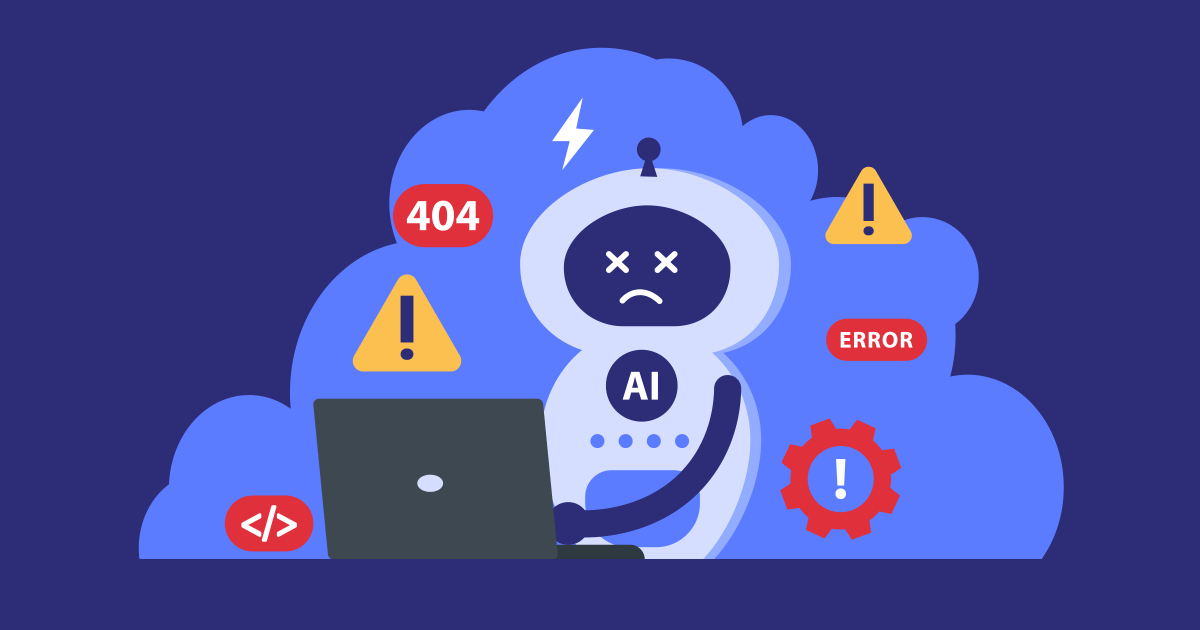
Today, Artificial Intelligence (AI) dominates every strategic and business growth conversation. So far, this is probably old news to you.
But once we move past theory, the reality is quite different. While budgets allocated to AI projects are exploding, many organizations encounter a major obstacle they hadn’t fully anticipated: their legacy systems are slowing down their digital transformation.
Does this reflect the reality of your company?
Here, the real obstacle isn’t even AI’s complexity. It’s the growing gaps in your systems. They were never designed for today’s standards and lack three crucial elements: clean and reliable data, flexible integration capabilities, and computing power.
Recognizing these limitations makes it clear why application modernization has shifted from a technical decision to strategic one.
1. Clean Data: AI’s Fuel
Would your data be ready to feed AI today? If your immediate thought was anything close to “yes, absolutely” ... well, this tab would (probably) be closed already.
AI’s efficiency relies entirely on its access to clean, structured, and consistently formatted data. To generate reliable analyses, machine learning algorithms require absolute accuracy in their data sources. Even slight data quality issues can quickly degrade the performance of the entire intelligent system.
However, for legacy systems, the information stored is messy and inconsistent. It is kept in incompatible formats, and lacks the governance required to ensure long-term data integrity. The result? Your data lives in silos, often in contradictory formats, which is exactly the opposite of what AI needs.
These analytical deficiencies create a massive roadblock for organizations looking to leverage their data as a true strategic asset.
Sounds familiar? Well, it clearly indicates that your existing infrastructure is limiting your ability to stay competitive.
The consequences are immediate: while you struggle with inconsistent information, competitors are already harnessing predictive analytics and intelligent automation. This gap in data maturity rapidly translates into a competitive disadvantage.
Data architecture modernization eliminates these quality issues by providing automated governance systems, real-time validation pipelines, and consistent structuring that transform your information into resources immediately usable by AI.
2. Flexible Integrations: The Unified Ecosystem
How much time do you spend on custom integrations? If you have to think about it, it’s already too much.
AI requires a complete, unified view of data. Legacy systems create the opposite environment where each custom connection adds complexity and new points of failure.
Most organizations run multiple infrastructures that were never designed to communicate efficiently together, creating significant integration hurdles.
Let’s take a concrete example: customer’s information often lives separately across marketing, sales, and support systems. Each speaks its own language. Before data can even be fed to AI, it must be transformed, cleaned, and harmonized. This complexity restricts AI initiatives to limited and isolated use cases.
The solution? An API-first architecture.
Modern application architectures address these challenges with a design focused on Application Programming Interfaces (APIs). Instead of forcing complex integrations between incompatible systems, APIs provide standardized connectivity. This enables smooth data sharing and consistent AI integration across the entire technology ecosystem.
3. Elastic Resources: Infrastructure That Adapts
How many times have your systems buckled under unexpected spikes in activity? If the answer isn’t “never”, imagine what will happen when AI workloads are added to the mix.
This question often reveals the most critical limitation of legacy infrastructures: their lack of scalability. AI applications require massive resources in addition to flexible capacity to manage variable workloads.
Legacy systems quickly hit reach their limits. They were built for predictable, static loads, making them fundamentally unsuited for the dynamic computing demands of AI.
What happens when an organization tries to graft AI onto them? It’s common to see system crashes, degraded performance, and operational instability. Even worse, years of accumulated technical debt. This is the result of all the shortcuts, temporary fixes, and workarounds that gradually make the systems harder and more expensive to maintain. These are all symptoms of a fundamental mismatch in architecture.
This burden prevents organizations from investing in innovation and modernization, creating a vicious cycle where legacy systems slowly become obsolete. Without the required scalability, businesses miss out on essential advancements in machine learning and intelligent automation.
The adoption of modern solutions solves these scalability challenges by enabling dynamic resource allocation, true agility through microservices, and compatibility with today’s AI technologies.
Preparing Your Organization for an AI-Driven Future
Ready to turn your constraints into advantages?
Your legacy systems don’t doom your AI ambition, but they demand a purposeful transformation. Those who recognize this and invest in Application Modernization will be positioned at the forefront of their industries, leveraging data-driven decision-making as a true competitive edge.
The key is approaching transformation strategically, letting AI requirements shape architectural decisions and implementation priorities. This means investing in frameworks that ensure data quality, API-first design, cloud-based scalable infrastructures, and modern development practices that enable continuous innovation.
The cost of modernization is significant, but the cost of staying stuck on legacy systems that steadily grow obsolete while competitors capitalize on AI advantages is often far greater. The calculation is simple: staying on existing systems is more expensive than modernizing.
Beyond AI, modernization delivers broader strategic benefits. Modern infrastructures allow businesses to respond faster to market opportunities, adopt new technologies quickly, and maintain a strong competitive position as requirements evolve.
Today’s investment becomes tomorrow’s competitive advantages, sustaining your organization’s market leadership in the long run.


